For years, fat was the bad guy. Grocery shelves filled up with low-fat cookies and fat-free dressings. Then the story flipped, and now some people add butter to their coffee.
No wonder so many of us are confused about how much fat per day we should eat. Here's the thing: fat isn't good or bad on its own. You need some. The amount and the type are what matter.
Let me walk you through the numbers, the different kinds of fat, and how to turn it all into grams you can actually use.
How much fat per day? The short answer
The main US reference comes from the Institute of Medicine's 2005 report on nutrients. It sets an "acceptable range" (called the AMDR) for fat:
20% to 35% of your daily calories.
The World Health Organization uses a similar range. It says adults should get at least 15% of their calories from fat, and that keeping total fat to 30% or less may help prevent unhealthy weight gain.
Why fat grams add up fast
The NHS explains that every gram of fat has 9 calories. A gram of protein or carbs has 4. So a small amount of fat carries a lot of energy. That's not a problem. It just means portions matter.
Your fat target in grams
To turn a percentage into grams, multiply your calories by the percentage, then divide by 9. Here's what that looks like:
| Daily calories | 20% fat | 30% fat | 35% fat |
|---|---|---|---|
| 1,600 | 36 g | 53 g | 62 g |
| 2,000 | 44 g | 67 g | 78 g |
| 2,500 | 56 g | 83 g | 97 g |
| 3,000 | 67 g | 100 g | 117 g |
Let me show you two real examples. I ran both through the Mifflin-St Jeor equation, which estimates the calories you burn at rest. Then I adjusted for activity:
- A 40-year-old woman, 170 lb (77 kg), 5 ft 5 in (165 cm), lightly active, needs about 1,980 calories. Her fat range is about 44 to 77 g a day.
- A 40-year-old man, 190 lb (86 kg), 5 ft 10 in (178 cm), moderately active, needs about 2,760 calories. His fat range is about 61 to 107 g a day.
Our macro calculator does this for you. It lets you pick a lower fat (20%), balanced (30%), or higher fat (35%) split, all inside the 20% to 35% range. Need your calories first? Start with our calorie calculator.
The saturated fat limit
Total fat is only half the story. The type matters too.
Saturated fat is the kind found mostly in animal foods, like fatty meat, butter, cheese, and cream. It's also in palm oil and coconut oil. Here's what the main guidelines say:
| Source | Saturated fat limit |
|---|---|
| World Health Organization | No more than 10% of calories |
| Dietary Guidelines for Americans 2025 to 2030 | No more than 10% of calories |
| NHS (UK) | Men: 30 g a day. Women: 20 g a day |
At 2,000 calories, 10% works out to about 22 g of saturated fat. For the woman in our example, it's about 22 g. For the man, it's about 31 g.
Why the limit? The NHS says too much saturated fat can raise "bad" LDL cholesterol in your blood. That can increase the risk of heart disease and stroke.
What about trans fat?
Trans fat can also raise cholesterol, says the NHS. The WHO recommends no more than 1% of calories from trans fat. The NHS sets a limit of about 5 g a day for adults. Industrially made trans fat is found in some baked and fried foods and packaged snacks, according to the WHO.
The different types of fat
This is where it gets interesting. Most fats and oils are a mix of types, says the NHS.
- Saturated fat: fatty cuts of meat, sausages, butter, ghee, cheese, cream, pastries, palm oil, and coconut oil.
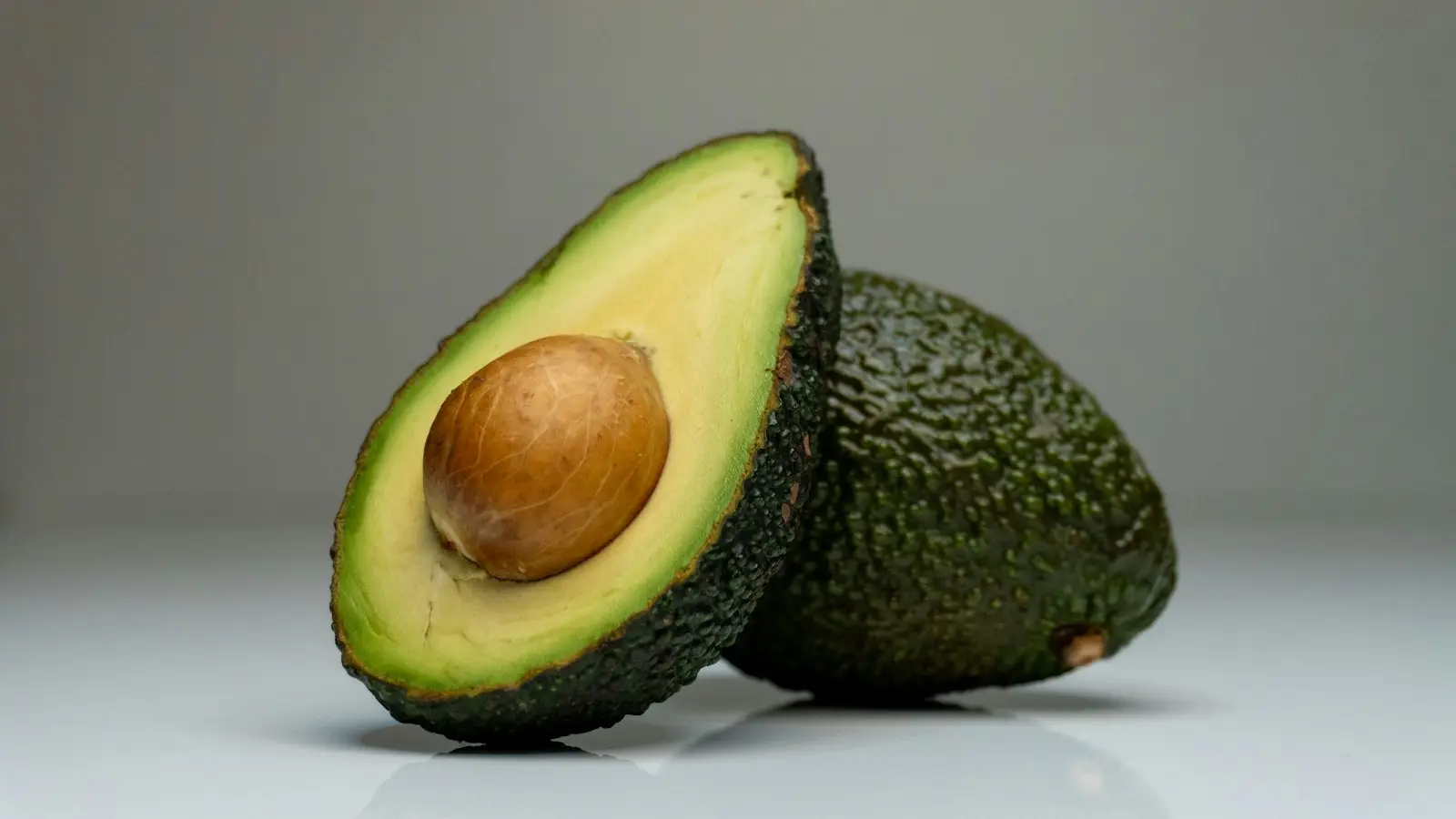
- Monounsaturated fat: olive oil, rapeseed (canola) oil, avocados, and some nuts like almonds and peanuts.
- Polyunsaturated fat: this includes omega-3 fats in oily fish like salmon, mackerel, and sardines, and omega-6 fats in oils like sunflower and corn, plus walnuts.
The NHS says there's good evidence that replacing saturated fat with some unsaturated fat can help lower cholesterol. It also recommends at least 2 portions of fish a week, with 1 of them oily.
Why you need fat at all
Fat isn't just calories. According to the WHO, two fatty acids (linoleic acid and alpha-linolenic acid) can only come from your diet. The NHS adds that fat helps your body absorb vitamins A, D, and E.
So cutting fat to near zero isn't the goal. Choosing it well is.
Fat in common foods
Here's how much fat is in some everyday foods, from USDA data:
| Food | Portion | Total fat | Saturated fat |
|---|---|---|---|
| Canola oil | 1 tbsp | 14.0 g | 1.0 g |
| Olive oil | 1 tbsp | 13.5 g | 1.9 g |
| Ground beef, 90% lean, broiled | 3 oz (85 g) | 10.0 g | 3.9 g |
| Coho salmon, cooked | 3 oz (85 g) | 6.4 g | 1.4 g |
| Butter, salted | 1 pat | 4.1 g | 2.6 g |
USDA data also lists a large egg at about 4.8 g of fat. Notice how a single tablespoon of oil has almost as much fat as two servings of salmon. That's why cooking oil is worth measuring now and then.
Fat when you eat out
Restaurant meals can swing a lot. A few examples from our chain guides:
- Chick-fil-A: 8 ct Grilled Nuggets have just 3 g of fat and 25 g of protein for 130 calories.
- Starbucks: Egg White & Roasted Red Pepper Egg Bites have 8 g of fat. The Bacon & Gruyère Egg Bites have 20 g. See our Starbucks guide.
- Chipotle: the High Protein - Low Calorie Bowl has 29 g of fat in 460 calories. Most of that comes from the guacamole. Avocados are a source of monounsaturated fat, according to the NHS.
- Sweetgreen: the Cali Chicken Club Wrap has 90 g of fat and 1,285 calories. That's more than the top of the range for someone eating 2,000 calories a day.
One high-fat meal isn't a disaster. Just balance the rest of your day around it.
What about keto and high-fat diets?
Some people eat far more fat on purpose. According to Harvard's Nutrition Source, popular keto resources suggest about 70% to 80% of calories from fat. That's well above the 20% to 35% range in the US guidelines.
If you're curious, our keto calculator shows what those numbers look like for you. It's a big change, so it's worth talking it over with your doctor first, especially if you have a health condition or take medicines.
Easy ways to choose better fats
Here's the good news: you don't need to count every gram. A few swaps from the WHO, the NHS, and the Dietary Guidelines make a big difference:
- Bake, grill, roast, or stir-fry instead of deep-frying.
- Cook with plant oils like olive, canola, sunflower, or soybean oil more often than butter, lard, or ghee.
- Trim visible fat from meat, and choose leaner cuts.
- Eat fish a couple of times a week.
- Snack on nuts and seeds instead of pastries or cookies.
You'll see some disagreement on dairy. The WHO suggests reduced-fat dairy, while the 2025 to 2030 US guidelines encourage full-fat dairy with no added sugar. Both still cap saturated fat at 10% of calories, so that limit is your anchor either way.
Reading labels
The NHS gives simple label rules per 100 g:
- High fat: more than 17.5 g. Low fat: 3 g or less.
- High saturated fat: more than 5 g. Low saturated fat: 1.5 g or less.
One warning from the NHS: "lower fat" foods aren't always lower in calories. Sometimes sugar replaces the fat.
When to check with a professional
If you have high cholesterol, heart disease, diabetes, or a digestive or liver condition, your fat needs may be different. Talk to your doctor or a registered dietitian before making big changes.
What this means for you
Based on what I've seen in the research, the most useful habit is this: find your gram range, then focus on the type. Most of your fat should come from fish, nuts, seeds, avocados, and plant oils. Keep saturated fat under 10% of your calories.
The bottom line
So, how much fat per day should you eat? For most adults, 20% to 35% of calories. That's roughly 44 to 78 g on a 2,000-calorie day. Keep saturated fat to about 10% of calories, or the NHS limits of 20 g for women and 30 g for men.
Fat is a normal, needed part of a healthy plate. Get your personal numbers with our macro calculator, pick your favorite healthy fats, and enjoy them.