How much protein should you eat on Ozempic?
A 2025 joint advisory from four US nutrition and obesity groups lists 1.2 to 1.6 grams of protein per kilogram of body weight a day during active weight loss on GLP-1 medicines like Ozempic. That is higher than the basic adult minimum of 0.8 g/kg. Eating protein first at meals helps people reach it before feeling full.
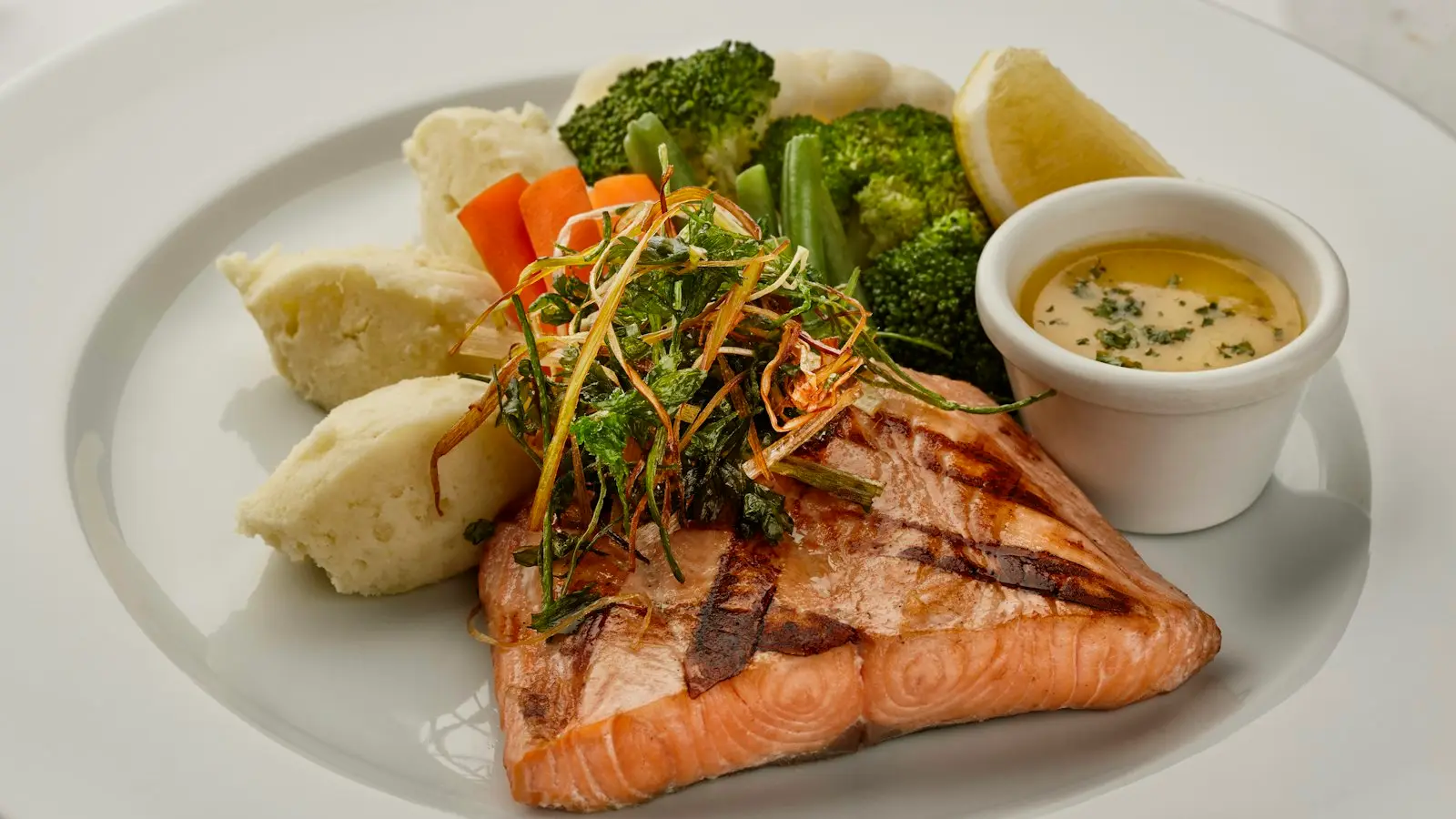
Picture a plate of dinner on a GLP-1 medicine. A few bites in, you already feel full. So the real question isn't only how much to eat. It's which bites to save room for, and the research points to protein.
This guide is about food only
It does not cover medicine doses or side effects. Your doctor or care team is the right place for those questions.
Why does protein matter on a GLP-1 medicine?
Because some of the weight you lose can be muscle, and protein helps you keep more of it. GLP-1 medicines like Ozempic, Wegovy, Zepbound, and Mounjaro help many people eat less and lose weight. But you don't only lose fat.
In one large study of a GLP-1 medicine, about 38% of the weight people lost was lean mass, which includes muscle. The 2025 advisory reports that of an average 13.6 kg weight loss, 5.3 kg was lean body mass.
The advisory comes from four groups: the American College of Lifestyle Medicine, the American Society for Nutrition, the Obesity Medicine Association, and The Obesity Society. It lists keeping muscle and bone as a key goal during treatment.
Muscle helps you stay strong, move well, and keep your energy up. Two things help protect it: enough protein and strength exercise.
How much protein do you need on Ozempic or Wegovy?
The 2025 advisory lists 1.2 to 1.6 grams of protein per kilogram of body weight a day during active weight loss. That is higher than the basic adult minimum of 0.8 g/kg.
Here is the simple math for a person who weighs 70 kg (about 154 lb):
- Basic minimum: 0.8 × 70 = 56 g a day
- During active weight loss: 1.2 × 70 to 1.6 × 70 = 84 to 112 g a day
There is a catch. The advisory says that for people with obesity, using full body weight can overestimate how much protein you need.
Our protein calculator handles this for you. Pick “On a GLP-1 medication” as your goal. Your care team can help you fine-tune the number.
Should you eat protein first?
Yes. When you feel full fast, the first few bites matter most. The advisory suggests eating protein-rich foods first in a meal, so you get them in before you feel full.
Try this at each meal:
- Start with the protein: the chicken, eggs, fish, tofu, or yogurt.
- Then eat the vegetables.
- Finish with rice, bread, or other starches if you still have room.
What are the best high-protein foods when you're not hungry?
Pick foods that pack a lot of protein into a small portion. Chicken breast, cottage cheese, Greek yogurt, canned tuna, tofu, eggs, and lentils all work well.
| Food | Portion | Protein |
|---|---|---|
| Chicken breast, roasted | 4 oz (113 g) | 35 g |
| Cottage cheese | 1 cup (226 g) | 24 g |
| Plain Greek yogurt, nonfat | 1 cup (226 g) | 23 g |
| Canned tuna in water, drained | 4 oz (113 g) | 22 g |
| Firm tofu | 4 oz (113 g) | 20 g |
| Eggs | 3 large | 19 g |
| Lentils, cooked | 1 cup (198 g) | 18 g |
Values come from USDA FoodData Central.
The advisory encourages protein from beans, peas, lentils, whole grains, dairy, seafood, eggs, and lean poultry. It also names fish, eggs, Greek yogurt, cottage cheese, and nuts or seeds as good options.
Do smaller meals help on a GLP-1 medicine?
They can. The advisory notes that small, frequent meals may work well when hunger and interest in food are low.
If big meals feel like too much, try four or five smaller ones. Give each one a protein food. A cup of Greek yogurt at 3 p.m. counts just as much as the protein at dinner.
What should you order when eating out on a GLP-1 medicine?
Look for orders with lots of protein in a smaller portion. Some good picks from our restaurant guides:
- Chipotle: the High Protein - Low Calorie Bowl (35 g protein, 460 calories) and the High Protein-High Fiber Bowl (46 g protein, 14 g fiber). Chipotle labels both “GLP-1 Friendly.”
- Chick-fil-A: 8 ct Grilled Nuggets have 25 g of protein for 130 calories.
- Starbucks: Egg White & Roasted Red Pepper Egg Bites have 12 g of protein for 170 calories. A Grande Iced Sugar-Free Vanilla Protein Latte adds 29 g.
- Subway: the Baja Chicken Protein Pocket has 24 g of protein for 330 calories.
See our list of chains with GLP-1 and high-protein menus for more.
Do you need strength exercise too?
Yes. The advisory lists resistance training, along with enough protein, as a key way to keep muscle. Protein works best when you also give your muscles a reason to stay.
Strength exercise can mean lifting weights, resistance bands, or bodyweight moves. The advisory suggests strength training at least 3 times a week, plus at least 150 minutes of moderate aerobic exercise weekly. It notes that aerobic activity alone does less to protect lean mass.
Ask your care team what is safe for you before you start.
My take
Based on what I've seen in the research, the "protein first" habit is the easiest win here. It costs nothing, needs no special food, and fits any meal.
What I find interesting is the 38% figure. It is a reminder that the number on the scale doesn't tell the whole story. That is my reading of it, not a claim the advisory makes in those words.
The bottom line
On a GLP-1 medicine, aim for enough protein, eat it first, and add strength exercise when you can. The 2025 advisory's range is 1.2 to 1.6 g/kg a day during active weight loss.
Small, protein-rich meals and snacks make it easier. Get a personal target from our protein calculator, and bring any medicine questions to your care team.